





Blogs to Go
Amazon retail arbitrage and how to do it

Arbitrage’s meaning is simply buying where a thing is cheaper and selling where it’s worth more. You keep the spread.
On Amazon, that looks like retail arbitrage Amazon, finding discounted items in local stores and listing them on Amazon where demand supports a higher price. It’s not arbitrage betting or anything exotic; it’s everyday commerce, sped up by data and barcodes.
We’ll show you how to source confidently, sanity-check profit, and ship like a pro. If you want a peek behind the scenes, this explainer on how Amazon fulfillment centers work gives helpful context on the pick-pack-ship magic you’re tapping into.
If you can scan fast, compare smarter, and stay organized, you can do this, beginner, side-hustler, or seasoned seller alike.
What retail arbitrage really looks like in the wild?
Here’s the loop. Find, scan, buy, list. That’s the rhythm you’ll run again and again.

Start with big-box stores, off-price chains, drugstores, club warehouses, and local liquidators. Head straight for clearance aisles, end-caps, and seasonal markdowns; those are your strike zones.
Open your seller app, scan the barcode, and check sales rank, price history, estimated fees, and projected profit. Amazon’s own app makes the scanning bit straightforward and shows you whether a product already exists in the catalog, super handy for quick decisions in the aisle.
If it fits your rules and isn’t restricted, buy enough to matter without overexposing yourself to a price drop. Back home, prep and label, then list the inventory. Choose FBA for speed and trust, or FBM if you need tighter cost control; either way, your items will eventually flow through Amazon’s highly automated pick-pack network you saw above.
This is retail arbitrage Amazon in practice, quiet hunting in-store, exciting numbers on the spreadsheet. Seasonal flips are sneaky winners: post-holiday décor, off-season apparel, or school supplies after the rush. Track store cycles, note which chains discount deepest, and your hit rate climbs with every run.
Is it actually allowed or will my account be at risk?
Short answer first. Yes, but it depends.

The big question is retail arbitrage allowed on Amazon comes down to authenticity, accurate condition, and policy fit. You must list only genuine goods and match the exact condition Amazon expects. If you’re unsure, Amazon’s own Condition guidelines spell out what qualifies as New, Used, Like New, and more.
Keep receipts and be ready to show proof of authenticity. Some brands and categories are “gated,” meaning you’ll need approval before listing. Start by skimming the Restricted products list so you don’t source items you can’t sell.
Mind intellectual property. Claims from brands usually stem from trademark, copyright, or distribution concerns. Amazon’s Brand protection and IP policy explains how rights work and what triggers violations.
Brand gating exists. Even perfectly authentic goods can require approval in certain categories, or you may be limited to New condition only in specific niches. Category-specific condition pages (like Electronics or Toys) outline extra rules that can apply.
Bottom line. Retail arbitrage is viable and widely practiced, but staying compliant means sourcing authentic items, matching the correct condition, respecting restrictions, and keeping docs handy. Do that, and you minimize account risk.
The tools that separate guesswork from good buys!
Let’s gear up. Tools make the difference.
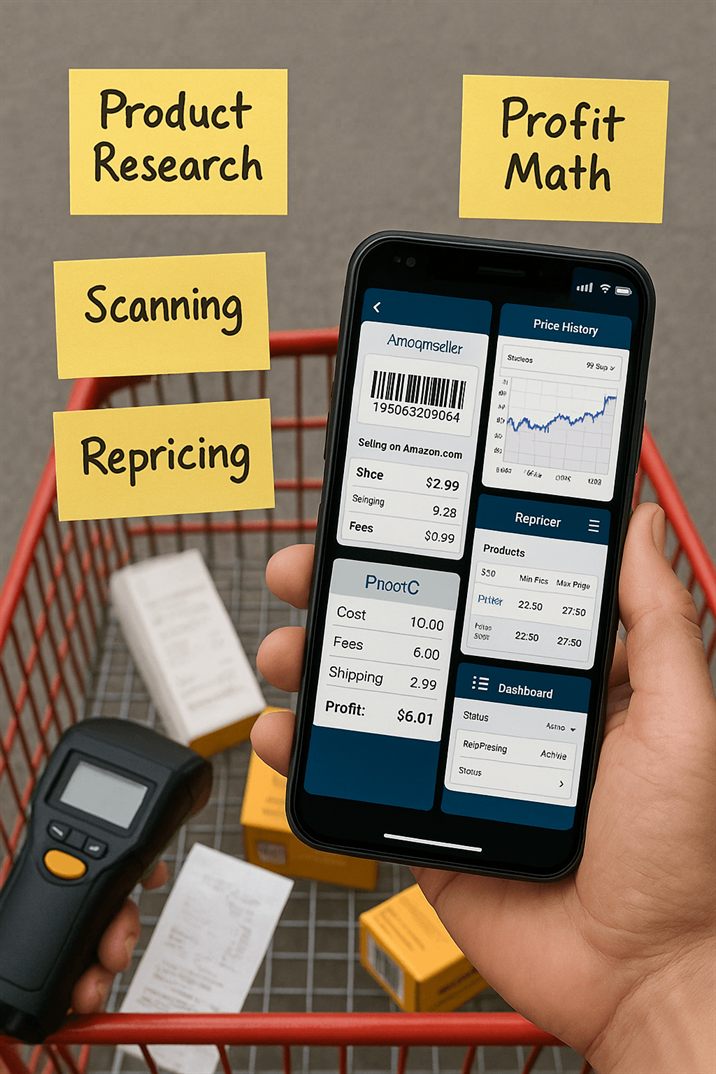
First, product research and price history. Keepa and CamelCamelCamel chart historical prices, sales rank trends, and competitive intensity so you know if a “deal” is real or just a temporary blip. Use them to validate velocity before you load a cart.
Next, mobile scanning and profit math. Your Amazon Seller app handles barcode scans and basic fees on the fly, but many sellers pair scanners with a profit calculator like Profit Cyclops to model true margin after FBA fees, inbound costs, and expected returns. That combo turns aisle decisions into data-backed calls.
Then, repricing, alerts, and OA extensions. Smart repricers like Repricer Cyclops help you set floors and ceilings, protect margin, and react to Buy Box shifts without a race to the bottom. Deal-alert tools and browser extensions flag price drops, coupon stacks, and limited-time promos for fast sourcing sessions.
Bundle it all together as your go-to stack of Amazon retail arbitrage tools. On the go, an Amazon retail arbitrage app setup looks like this: the Seller app for scanning, a quick link to Keepa charts for history, Profit Cyclops for accurate profit checks, and Repricer Cyclops to keep offers competitive while you’re driving home from a sourcing run.
Keep it simple. Research for reality checks, scanning for speed, profit math for sanity, repricing for defense, and your hit rate improves fast.
Your first sourcing trip made simple
Start small.
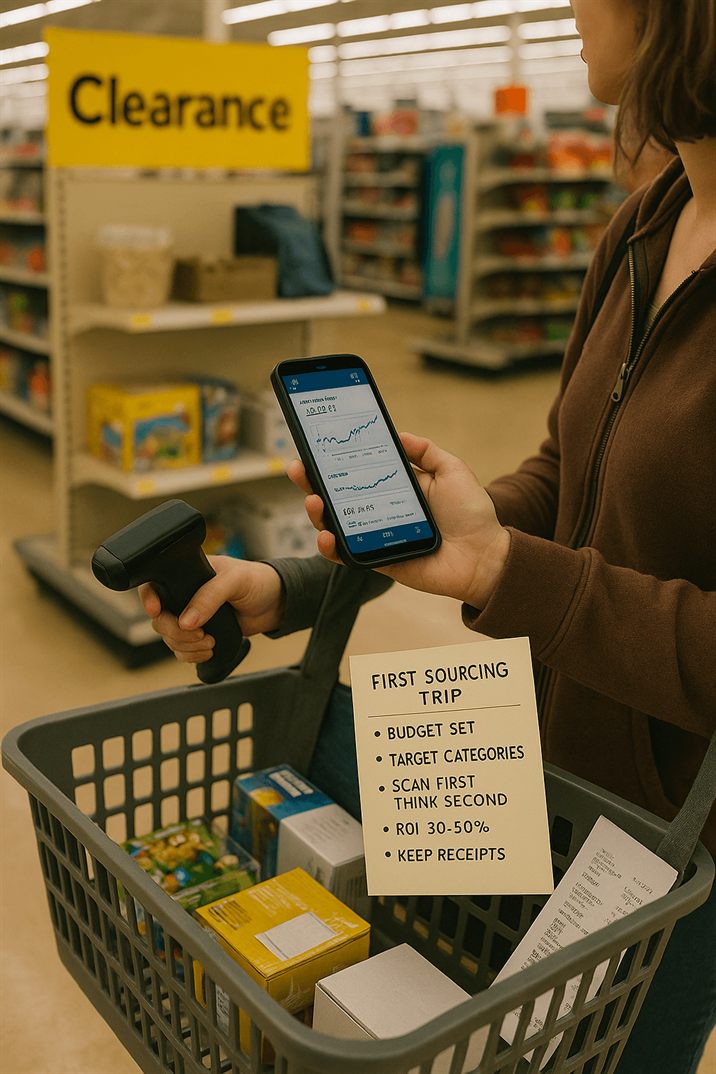
Make a pre-trip checklist. Set a budget you can afford to recycle quickly, pick two or three target categories you understand, and note clearance timing for your local stores. Weekend markdowns, end-of-month resets, and post-holiday cycles are prime.
Walk in with a plan. Head straight to clearance aisles, end caps, and seasonal sections. Keep your phone charged, a scanner ready, and a tote for quick sorting.
Scan first, think second. Use your seller app to check sales rank, recent price history, and competing offers. Peek at estimated fees and net profit. If you ship FBA, include inbound shipping and prep in your mental math.
Check comps before you commit. Are you matching the right variation and pack size? Are there brand or category restrictions? Have returns or meltable rules in play. If anything feels fuzzy, skip it.
Decide with rules, not vibes. Create a minimum ROI, many arbitrageurs aim for 30–50 percent after all fees, or a flat dollar target like five to ten per unit. Favor smaller, lighter products to reduce storage and fulfillment drag.
Buy enough to matter. Start with a test quantity to confirm sell-through, then circle back if it moves. Keep receipts and store them with the SKU list for authenticity requests.
Close the loop at home. Sort, prep, and label while the data is fresh. Create shipments the same day so cash starts its return journey. The faster you list and ship, the quicker you learn and the sooner profits recycle.
Stop wasting time on spreadsheets and start using what the professionals use.
Smart flips that move fast without drama
Know the play.
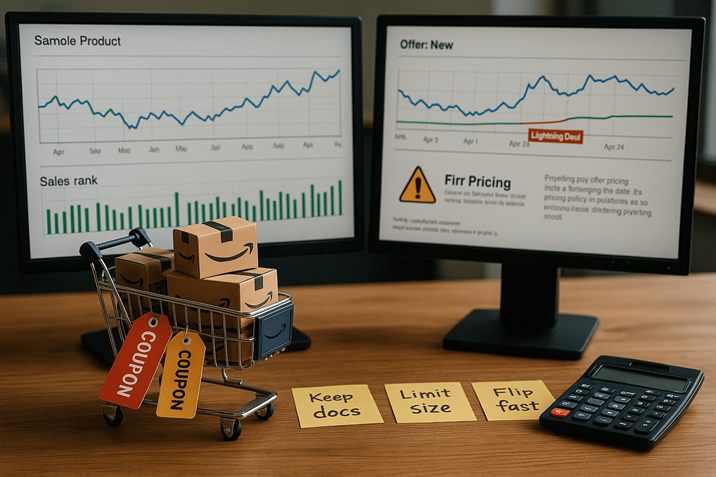
Amazon-to-Amazon flips and Amazon-to-Amazon arbitrage refer to sourcing opportunities where you buy on Amazon during temporary price dips or coupon stacks and resell when the market normalizes. It’s real, but it requires care.
Respect the rules. Stick to authentic, new condition items and avoid brand or category restrictions. Keep clean documentation for purchase provenance in case Amazon ever questions authenticity.
Spot the gaps faster. Tools like Arbitrage Cyclops help surface live price discrepancies and estimate after-fee profit, so you can filter noise, prioritize the cleanest opportunities, and act before the window closes.
Watch pricing dynamics. Flips often hinge on short-lived mispricings, lightning deals, or low-inventory gaps. When the Buy Box rebounds, profit exists, until it doesn’t. Move quickly and avoid chasing a price up the ladder.
Protect the Buy Box, don’t abuse it. Use competitive but fair pricing to win rotation. Always price responsibly, especially in sensitive categories or during seasonal spikes. Amazon’s fair-pricing policy can suppress your offer or listing if you push too far.
Keep risk tight. Limit position size, diversify across products, and avoid items with fragile packaging or high return rates. If fees or shipping erase your edge, walk away.
Flip fast. The goal is speed, not perfection. Clear the stock, recycle capital, and redeploy into the next clean opportunity with better risk-reward.
Arbitrage Cyclops can make that cycle a lot smoother. It surfaces real-time price gaps, estimates after-fee profit, and flags buy-box rebounds so you know which flips deserve cash now—not tomorrow. You can set an ROI floor, get alerts when targets hit, and auto-skip restricted brands or risky categories to stay compliant. It even nudges you to capture receipts and notes by SKU, so authenticity checks never slow you down.
Listing that sells and pricing that wins the Buy Box
Make it easy to say yes.
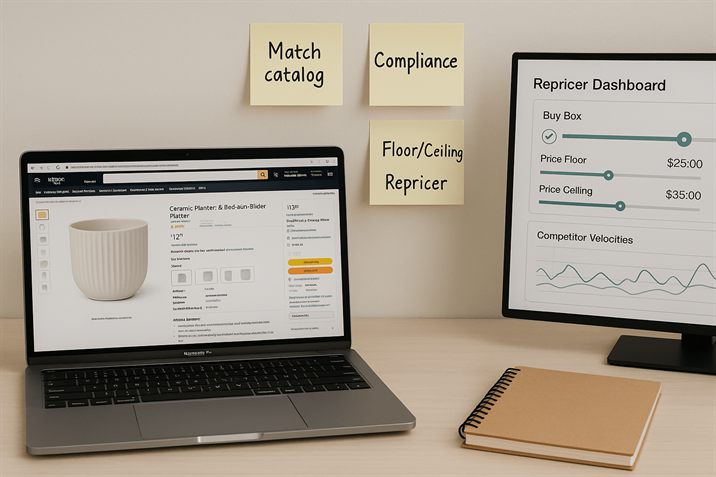
Match the exact catalog detail page. Use the correct variation, pack count, and condition. If you create a new listing, write a clear title, punchy bullets that lead with benefits, and an accurate description. Upload crisp images with a pure white background and show scale or use features where allowed.
Check compliance basics. Align with category image standards, age restrictions, and safety docs if required. Small misses can suppress a listing or trigger returns.
Price with a plan. Set a floor price that protects your margin after all costs and a ceiling that keeps you in Buy Box rotation. Review competitor velocities rather than just undercutting by a penny.
Reprice with intention. Use Repricer Cyclops to react to meaningful changes, not every blip. If FBA fees shift or storage costs creep up, adjust quickly.
Iterate weekly. Tweak keywords, swap images that underperform, and trim SKUs that drain attention. Small improvements compound into faster sell-through and steadier profits.
Shipping that saves money and time without headaches
Choose your lane.
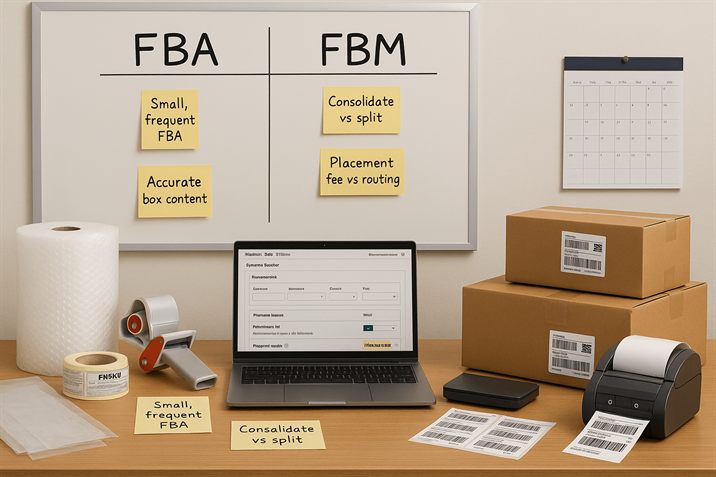
FBA buys speed and trust. You prep, label, and send inventory to Amazon; they handle storage, pick-pack, shipping, and customer service. For arbitrage, FBA often improves conversion and Buy Box share, but factor in inbound shipping, prep time, and placement service and storage fees into your math.
FBM keeps control close. You store and ship yourself, which can cut fees on slow movers or oversized oddballs. Just be ready to meet ship-by dates and keep packaging standards high to avoid defects.
Prep is protection. Use poly bags, suffocation warnings, and bubble wrap where required. Label every unit cleanly, avoid barcode confusion, and secure boxes so edge cases don’t become damaged.
Mind box content and routing. Provide accurate box content information to avoid receiving delays. Consider splitting shipments only when the fee trade-off makes sense; sometimes consolidating saves headaches even if it nudges cost.
Watch placement service. If you opt to ship to a single node, budget for placement fees; if you accept distributed routing, plan for extra labels and transit time. Choose the path that preserves margin and keeps cash cycling.
Tie it to cash flow. Faster turn means healthier cash. Send small, frequent FBA shipments for quick replenishment rather than giant pallets that sit. For FBM, batch your label purchases and negotiate carrier rates to keep outbound costs predictable.
Close the gap. The goal is simple: ship accurately, arrive fast, minimize surprises. When shipping is smooth, profits show up sooner and decisions stay clear.
Ads that boost visibility without burning the budget
Keep it tight.
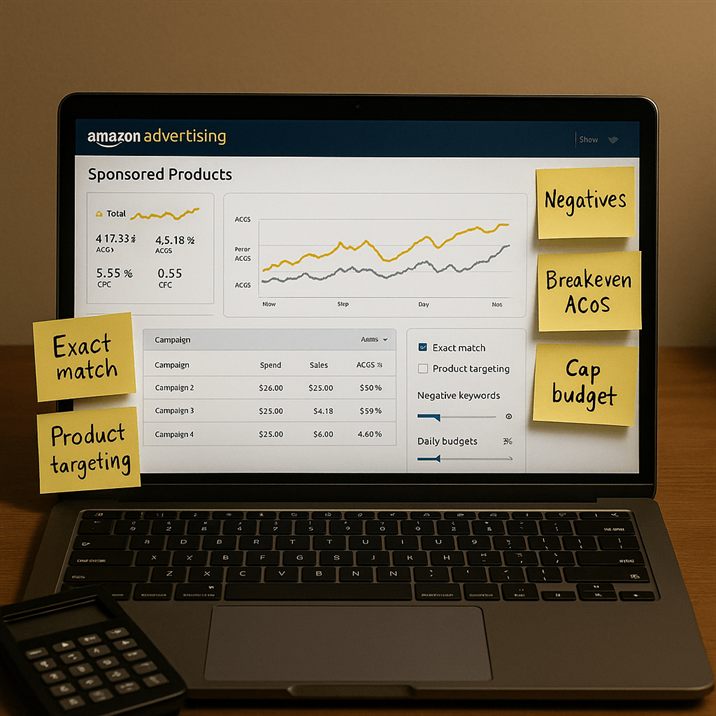
Amazon PPC can lift the right arbitrage SKUs without draining margin. Start with Sponsored Products, they’re simple, intent driven, and perfect for quick tests.
Go for quick wins. Use exact-match terms on proven items and product-targeting ads against the exact ASIN you’re listing on. Keep bids modest, cap daily budgets, and pause anything that doesn’t convert within a few clicks.
Protect margin. Track your breakeven ACoS and set a target below it. Add negative keywords to filter junk traffic, and throttle bids on low-price items that can’t absorb ad spend.
Eliminate low performers. If an ad spends two or three clicks with no add-to-cart, pause or cut the bid. Move budget to winners and re-test later with tighter targets.
Want a walkthrough you can copy and paste? Here’s a practical beginner PPC setup that keeps spending in check while you learn.
The common pitfalls that quietly kill profit
Know the traps!

Counterfeits and authenticity risk
- Buy only from reputable retailers and keep receipts.
- Avoid open-box or repackaged goods.
- Match the exact catalog ASIN every time.
Returns churn
- Skip fragile packaging and trend items with high return rates.
- Check reviews for recurring complaints before buying.
- Over-pack delicate items and inspect each unit.
Seasonality whiplash
- Don’t overbuy late in the season.
- Set exit dates and discount early.
- Park capital in evergreen SKUs between seasons.
Meltables and temperature-sensitive items
- Respect Amazon’s meltable blackout window.
- Use FBM only if you can control climate and speed.
- Avoid borderline products that trigger damage claims.
Oversized and heavy units
- Recalculate fees, dim weight can crush margins.
- Prefer small and light for faster turns.
- Bundle only when total fees still make sense.
Long-term storage creep
- Set sell-through targets and reorder only on proof.
- Run coupons or price cuts before LTSF hits.
- Remove or liquidate aging stock decisively.
The analytics rhythm that keeps you profitable
Make it weekly!

Sell-through rate
Are units moving within your target window? If not, adjust price or ads.
ROI and average profit per unit
Confirm after-fee profit with your calculator. If ROI drops below your floor, reprice or exit.
Stranded and suppressed inventory
Fix listing mismatches, compliance flags, and barcode issues before they stall cash flow.
Refund and defect rates
Audit SKUs with high return reasons. Tighten prep or retire problem items.
Replenishment cadence
Reorder only on data, not hunches. Faster, smaller FBA shipments keep cash cycling.
Many sellers sanity-check margins with a lightweight profit app like Profit Cyclops during this review so decisions stay grounded in real numbers.
Frequently asked questions answered straight
Quick hits.
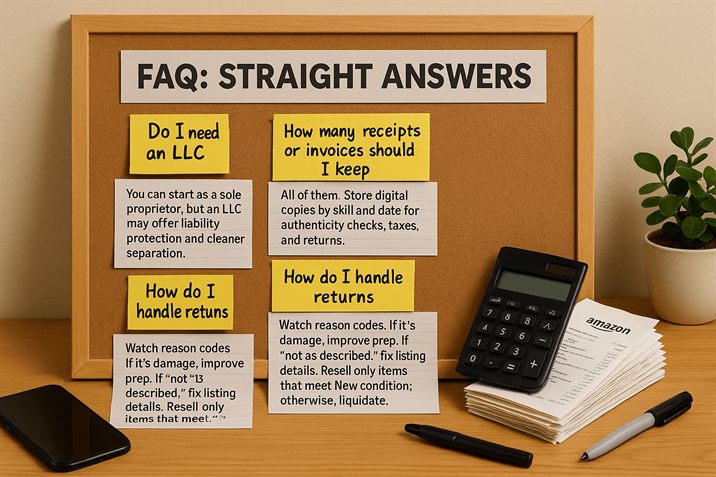
Do I need an LLC?
You can start as a sole proprietor, but an LLC may offer liability protection and cleaner separation. Laws differ, consult a qualified professional.
How many receipts or invoices should I keep?
All of them. Store digital copies by SKU and date for authenticity checks, taxes, and returns.
How do I handle returns?
Watch reason codes. If it’s damage, improve prep. If “not as described,” fix listing details. Resell only items that meet New condition; otherwise, liquidate.
Want the tax angle in plain English? Here’s a practical guide to tax returns for Amazon sellers that clarifies deductions, forms, and record-keeping.
Final action plan you can follow today
Move now!
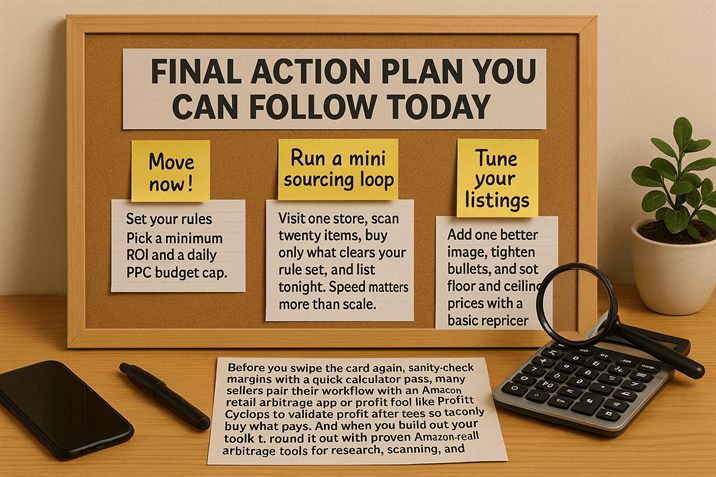
Set your rules
Pick a minimum ROI and a daily PPC budget cap. Write them down so you stick to them.
Run a mini sourcing loop
Visit one store, scan twenty items, buy only what clears your rule set, and list tonight. Speed matters more than scale.
Tune your listings
Add a better image, tighten bullets, and set floor and ceiling prices with a basic repricer like Repricer Cyclops.
Before you swipe the card again, sanity-check margins with a quick calculator pass, many sellers pair their workflow with an Amazon retail arbitrage app like Arbitrage Cyclops or profit tool like Profit Cyclops to validate profit after fees so they only buy what pays. And when you build out your toolkit, round it out with proven Amazon retail arbitrage tools for research, scanning, and repricing.